
OSIMA
3 hours → 1 click
One click turns a drawing into the bill of quantities, the manufacturer’s assembly sheet and the client quote. 14,000+ parts in the catalogue.
Read the case study →
For manufacturers
We work with medium-sized manufacturing companies. We find where hours disappear between the inquiry and the finished order, and we automate those steps. The same team gets more done in the same time.
We don’t change everything at once. We start with the stage that loses the most hours.
3 hours → 1 click
One click turns a drawing into the bill of quantities, the manufacturer’s assembly sheet and the client quote. 14,000+ parts in the catalogue.
Read the case study →
One system instead of five
CRM, project management and invoicing in one place. Data is entered once and moves on its own.
Read the case study →
Products that clients find
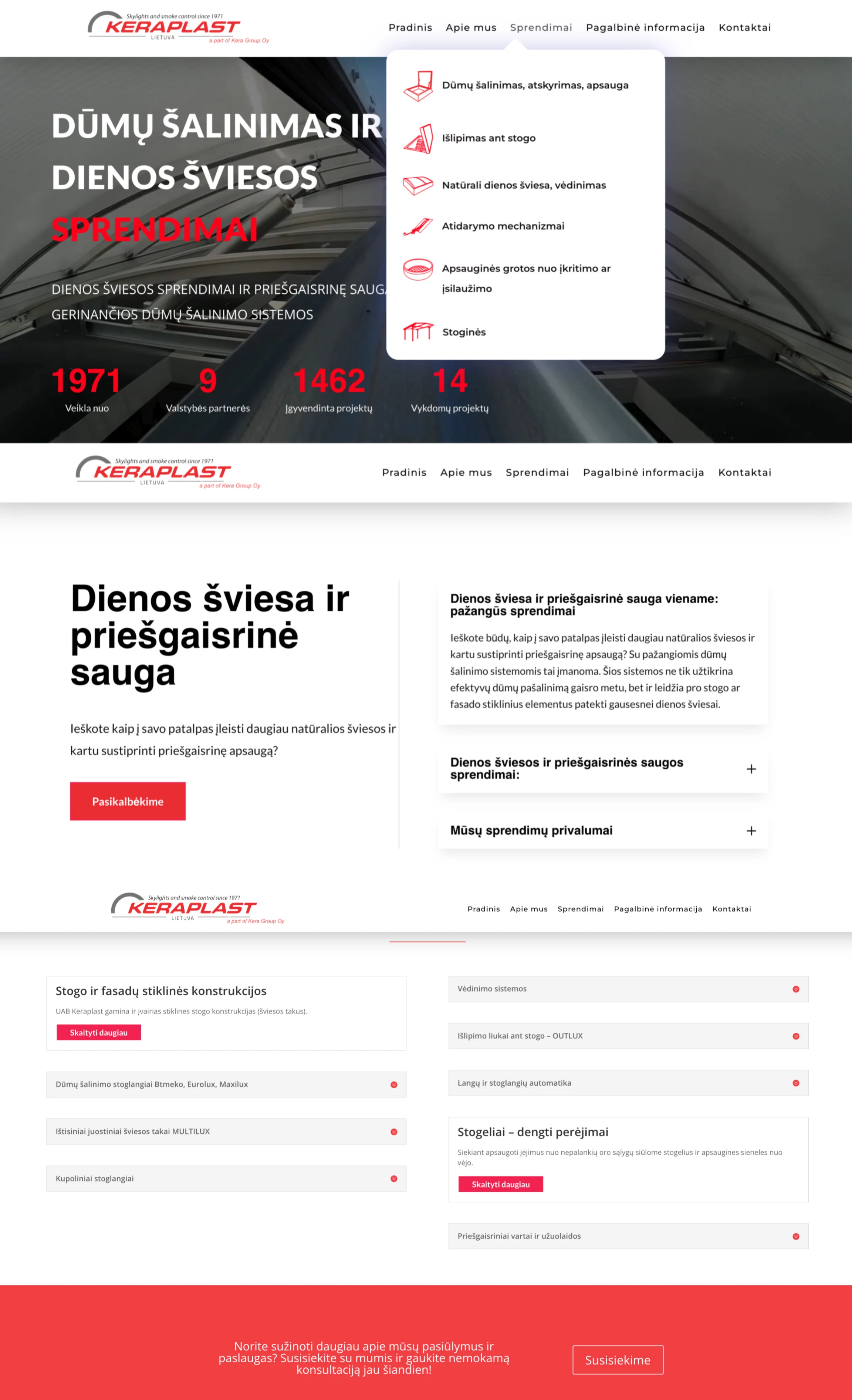
Website and advertising for a manufacturer, aimed at commercial partners and large projects.
Read the case study →
We give you a price after the process map, once it’s clear what we’re automating and how much.
Fixed price
A one-off tool or system with a clear scope. You know the price before we start.
Pilot, then fixed price
You pay monthly for a few months while the solution proves itself in your production, then we move to a fixed price.
One-off price plus a small monthly fee
When the solution needs a database that keeps updating, or hosting: a one-off build and a small monthly maintenance fee.
Confidentiality agreement
We sign an NDA before we start. Your processes, pricing and drawings stay between us.
Only the access we need
We connect to your systems only as far as the work requires, and revoke access when the project ends.
Data in the EU
We host solutions on your own infrastructure or on servers in the European Union, in line with GDPR.
No. Most of the time we connect to what you already use (ERP, CRM, accounting software, Excel) and automate what happens between them.
Processes differ, but the places where hours disappear are usually the same: quotes, quantities, planning and data entry. We find out in the first call.
The first working part is usually ready within a few weeks. We give you an exact plan after the process map.
In a free 30-minute call we’ll work out which stage of the chain is worth automating first.
Usually a 20–30 minute call. We ask about your business first, and only then propose a solution.